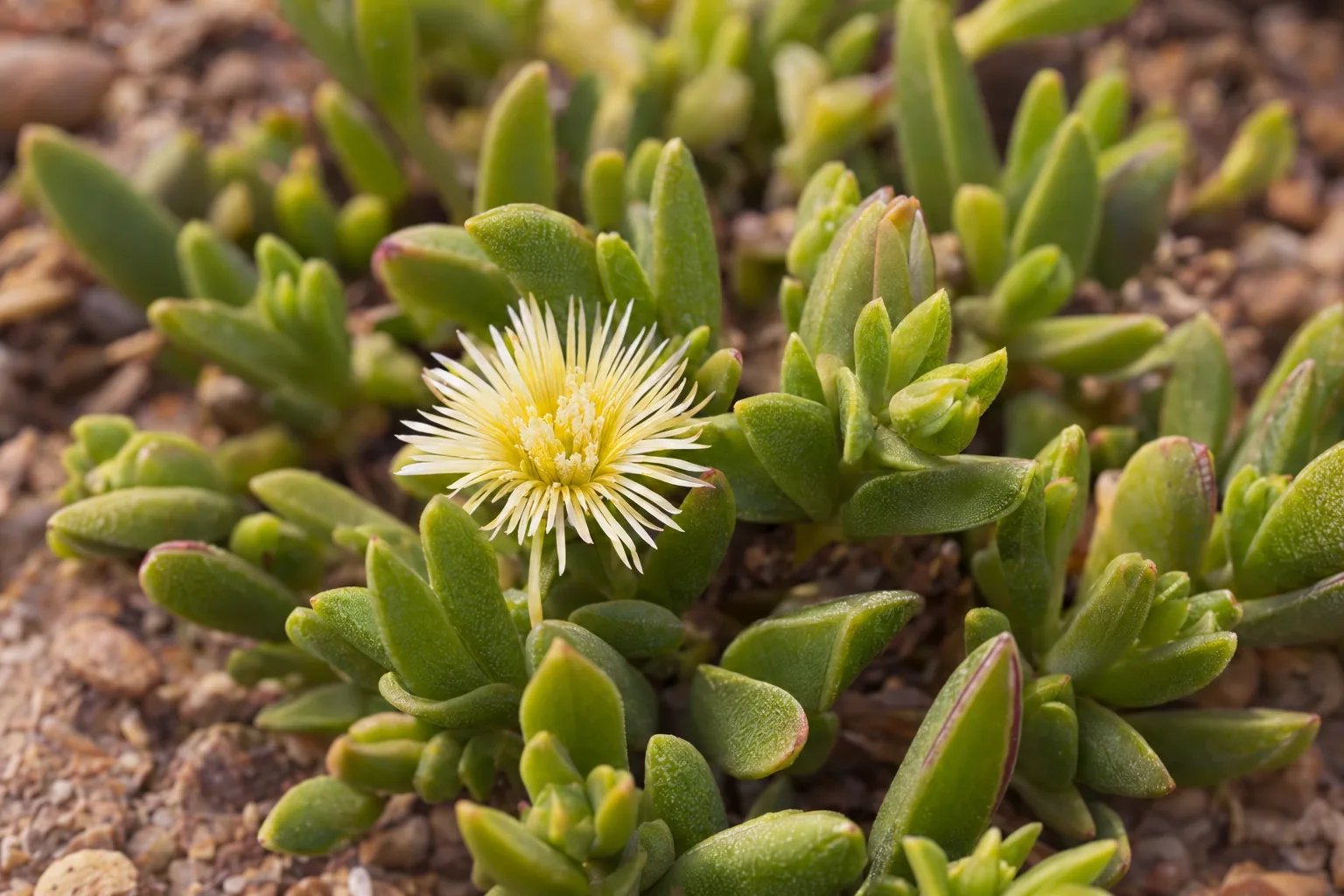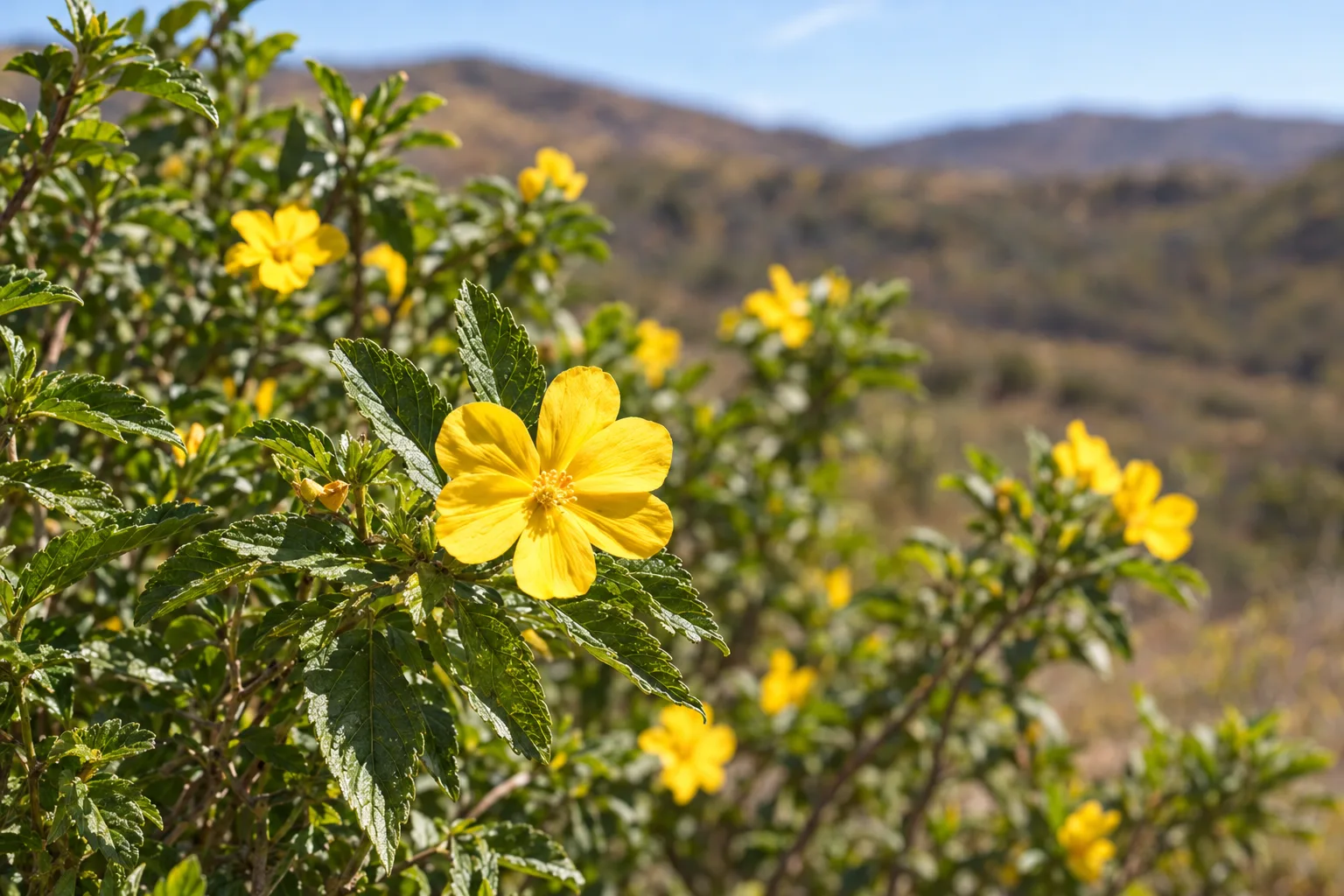
Damiana, also known as Turnera diffusa, is a small shrub that grows wild in warm, dry parts of the Americas. For generations, people have brewed its leaves into teas and folk remedies, and more recently shows up in herbal teas, tinctures, smoking blends, and supplements sold across the United States for its benefits.
Most of what you'll read about damiana benefits comes from folk history rather than from research in people. For centuries the plant has been linked with desire and intimacy, and that reputation still shapes how damiana is described.
At KANHA Sutra, damiana is one of the key ingredients in our Sunshine Bliss Gummies, chosen as a nod to that long history. Knowing a bit more about the origins and benefits of damiana make it much easier to read a product label with clearer eyes.
Where damiana grows in the wild:
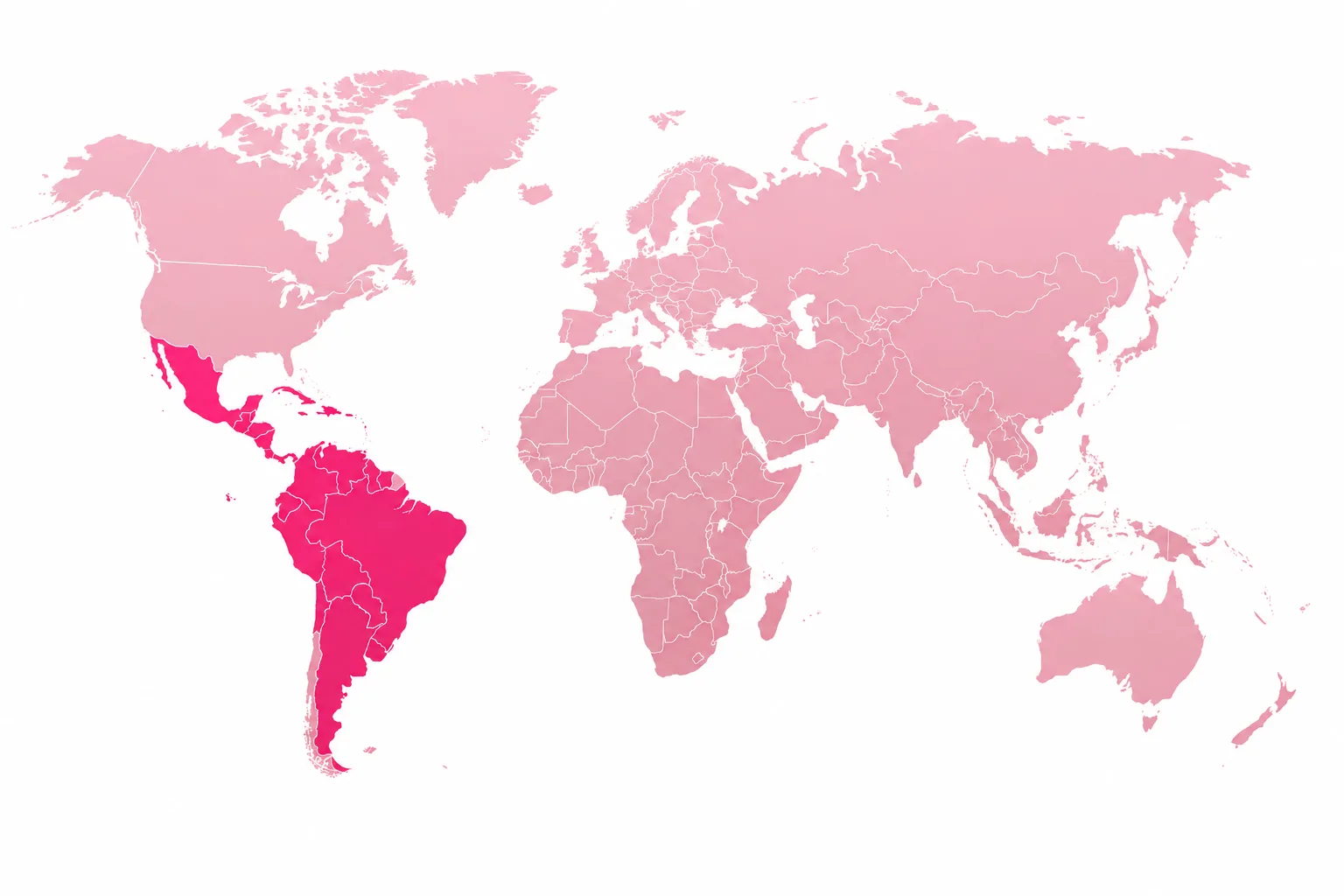
Damiana is a shrub in the passionflower family. Its habitat range stretches across Mexico, Mesoamerica, the Caribbean, north-eastern Brazil, and Texas, and its wider genus grows throughout the semi-arid parts of Central and South America. The ancient Mayan people counted damiana among their most important remedies.
It’s a hardy plant built for warm, dry places. During a 2005 plant hunt in Puerto Rico, USDA researchers found a wild population of damiana growing on coastal limestone hills, with small, soft, gray-green leaves.
In Mexico, damiana is known by folk names such as “hierba de la pastora” (shepherdess herb) and “hierba del venado” (deer herb). On US labels, you may also see older botanical names, including Turnera microphylla and Turnera aphrodisiaca. The second name hints at the reputation the plant carried long before it reached modern supplement shelves, though it records a traditional belief and is not evidence that damiana has that effect.
Damiana, a traditional herb for desire and good moods
Traditional Mexican medicine has long used damiana as a tonic, a gentle stimulant, and an aphrodisiac. Folk healers also brewed it for everyday comforts like colds, coughs, and upset stomachs. A USDA ethnobotany database records damiana uses from Mexico, Haiti, the Bahamas, and beyond, and “aphrodisiac” appears again and again when describing it.
That pattern is hard to miss. Across different regions and generations, people kept turning to damiana for when they wanted to feel lifted, warm, and in a more aroused mood. It was never about a dramatic effect; it was about a gentle, sensual spark and an overall sense of feeling good. That reputation is exactly why damiana still shows up in botanical blends made for connection today.
Gathering and drying damiana leaves
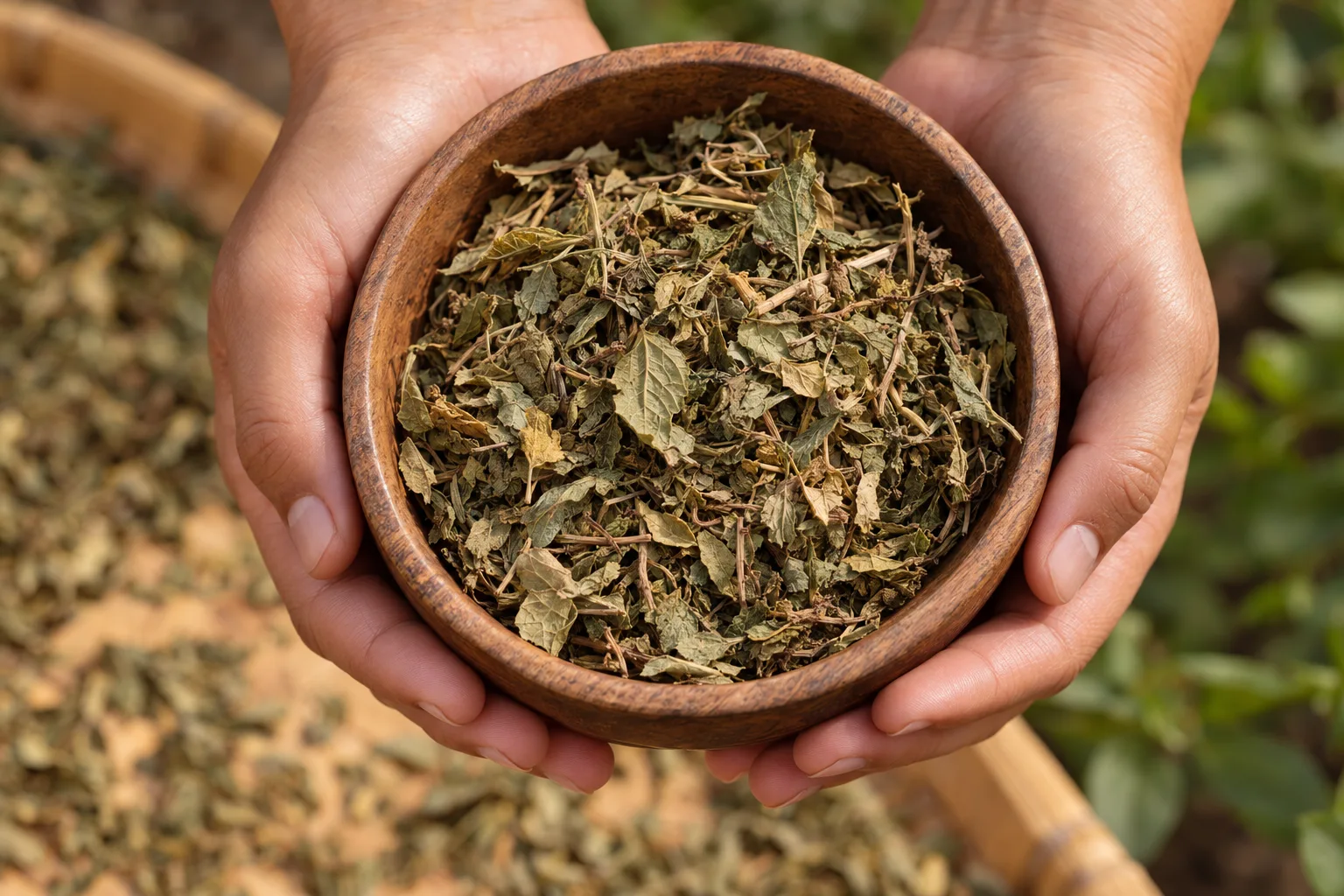
The part of damiana that reaches the shelf is mostly the leaf, sometimes with small stems. People have traditionally used the leaves for flavoring and for steeping in infusions, and even research labs often buy damiana the way shoppers do, as dried and cut aerial parts from commercial suppliers.
Like tea or coffee, damiana can vary from batch to batch. Where it grew, the soil, the climate, and how it was dried and stored all shape the final effects. Much of the supply has historically come from wild plants, and growers in Mexico have worked on cultivating it as a crop on semi-arid farmland. That’s why sourcing words like “wild-harvested” or “cultivated” are worth looking for on a label.
From 1870s tonic to herbal supplements
Damiana’s reputation crossed into the US early. Sellers began marketing it as an aphrodisiac and invigorating tonic in 1874, and medical journals of the decade printed glowing reports about it. Nineteenth-century marketing wasn’t known for modesty, but the enthusiasm shows how quickly damiana’s fame spread.
Today it plays a calmer role. Federal food rules list damiana leaf among the natural flavorings allowed in food, and the NIH tracks it as a botanical ingredient in dietary supplements. You’ll find it as loose leaf and tea bags, tinctures and liquid extracts, powders and capsules, and edibles such as gummies.
Damiana Benefits in KANHA SUTRA’s Sunshine BLISS Gummies
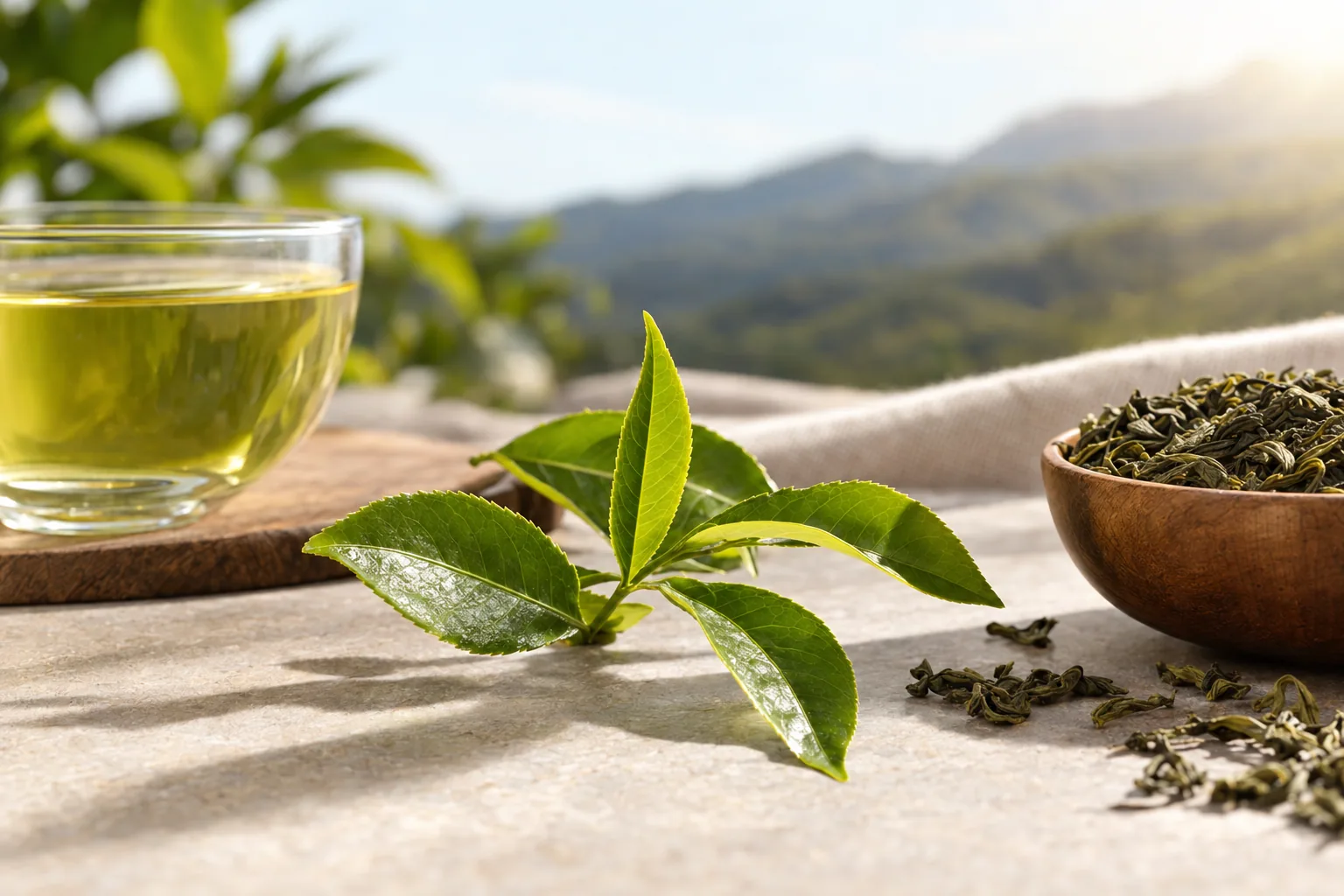
Damiana’s newest chapter pairs it with kanna (Sceletium tortuosum), a South African botanical traditionally used by indigenous cultures for mood and stress support. KANHA SUTRA’s Sunshine BLISS Love Gummies bring the two together with green tea extract in a Raspberry Rose flavored gummy, made with 35 mg of kanna extract per piece and no THC.
Each botanical plays its part. Kanna is there to lift mood and quiet self-consciousness, damiana's benefits adds the warm, sensual spark it has been known for, and green tea keeps things clear-headed. The result is what KANHA Sutra calls relaxed magnetism: calmer confidence, easier conversation, and a warm sense of desire. It’s made for date nights, intimate moments, and alcohol-free evenings, and it doesn’t intoxicate. As the brand puts it, BLISS turns chemistry into connection.

Trying a product that contains damiana
Knowing where damiana comes from makes a label easier to judge. Look for the botanical name (Turnera diffusa or one of its other names), the plant part and format, sourcing details like wild-harvested or cultivated and country of origin, and how much damiana is in the product, especially in a blend. Much of damiana’s reputation rests on centuries of traditional use, with modern research still in its early stages.
Damiana has taken many forms over the centuries, from dried leaves to teas, tinctures, and blends, but the reason people reach for it hasn’t. People still tend to enjoy it with good company for a moment worth savoring.
If you're interested in trying a product with the added benefits of damiana, KANHA SUTRA may be a good fit for you. Made with Kanna root extract, damiana, and green tea extract, BLISS opens the door to deeper presence and attraction. Read more about Sunshine Bliss here!